IPL vs Laser Genesis: Which Skin Treatment Is Better?
- Julitssa Davis
- May 10, 2026
If you’re looking to improve redness, sun damage, uneven skin tone, acne scars, or signs of aging, you’ve probably come across IPL (Intense Pulsed Light) and Laser Genesis. While both treatments can improve your complexion, they work in very different ways.
Choosing the wrong treatment may lead to disappointing results—or simply treat the wrong skin concern.
In this guide, we’ll compare IPL vs Laser Genesis, explain how each treatment works, discuss who is the best candidate for each, and help you determine which option may be right for your skin.
Key Differences Between IPL and Laser Genesis
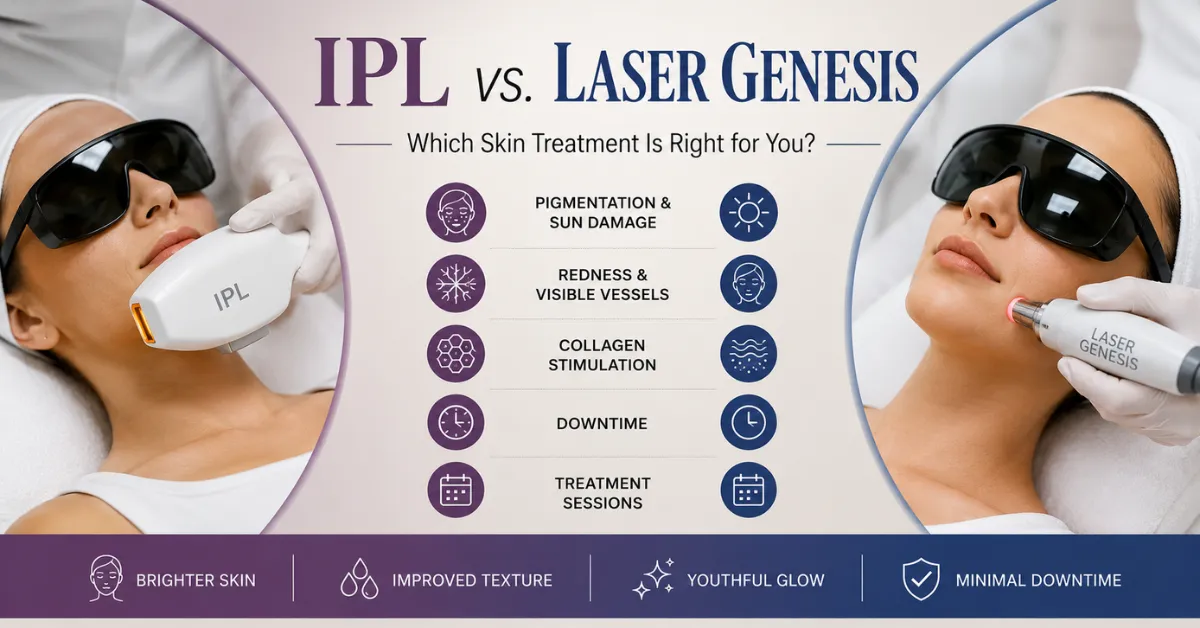
| Feature | Laser Genesis | IPL |
|---|---|---|
| Technology | 1064nm Nd:YAG Laser | Broad-spectrum Intense Pulsed Light |
| Best For | Redness, rosacea, enlarged pores, acne scars, collagen | Sun damage, brown spots, freckles |
| Skin Tone | Safe for most skin tones | Best for lighter skin tones |
| Downtime | Little to none | Mild redness for 1–3 days |
| Pain | Mild warming sensation | Snapping sensation |
| Sessions | 4–6 | 3–5 |
| Collagen Stimulation | Excellent | Moderate |
| Pigmentation Removal | Moderate | Excellent |
| Redness Reduction | Excellent | Good |
| Fine Lines | Excellent | Moderate |
What Is Laser Genesis?
Laser Genesis is a non-ablative laser skin rejuvenation treatment that gently heats the upper layers of the skin to stimulate natural collagen production without damaging the skin’s surface. It uses a 1064 nm Nd:YAG laser to improve overall skin quality by promoting collagen remodeling and reducing inflammation.
Unlike more aggressive laser treatments, Laser Genesis works gradually, making it an excellent option for people who want noticeable improvements with little to no downtime.
Laser Genesis is commonly used to treat:
- Fine lines and early wrinkles
- Diffuse facial redness and rosacea
- Acne scars
- Enlarged pores
- Uneven skin texture
- Dull or aging skin
Most patients describe the treatment as a gentle warming sensation, and a session typically takes 30 to 45 minutes. Because collagen production continues after treatment, results develop gradually over several weeks, with the best outcomes usually achieved after a series of treatments.
What Is IPL (Intense Pulsed Light)?
Intense Pulsed Light (IPL) is a non-invasive skin treatment that uses broad-spectrum light to reduce sun damage, brown spots, freckles, redness, and uneven skin tone. Unlike Laser Genesis, IPL is not a laser. It targets excess pigment and visible blood vessels, helping create a clearer, brighter complexion.
IPL treatments typically take 20–40 minutes with minimal downtime, and most people achieve the best results after 3–5 sessions.
Which Is Better for Darker Skin?
Laser Genesis is generally a better option for a wider range of skin tones, including many darker skin types. Its 1064 nm Nd:YAG laser bypasses much of the skin’s surface pigment, reducing the risk of hyperpigmentation or burns.
IPL is typically best suited for lighter skin tones because it targets melanin. On darker skin, it may increase the risk of pigment changes if not performed by an experienced provider. A professional skin assessment is essential before choosing IPL.
Which Treatment Produces Faster Results?
IPL often delivers faster visible results for pigmentation. Many patients notice brighter skin and fading sun spots after just one treatment.
Laser Genesis works more gradually by stimulating collagen production. Improvements in skin texture, redness, and fine lines continue to develop over several weeks, with the best results after a series of treatments.
Which Results Last Longer?
Both Laser Genesis and IPL can provide long-lasting results when combined with proper maintenance and skincare.
- Laser Genesis: Results can last 6–12 months with maintenance treatments and a consistent skincare routine.
- IPL: Pigmentation improvements can also last 6–12 months, but new sun damage may cause discoloration to return.
To extend your results:
- Wear broad-spectrum SPF 30+ sunscreen daily.
- Limit excessive sun exposure.
- Follow a medical-grade skincare routine.
- Schedule maintenance treatments as recommended by your provider.
Which Treatment Should You Choose?
The best treatment depends on your skin concerns rather than which technology is newer.
Choose Laser Genesis if you want to:
- Reduce facial redness or rosacea
- Improve acne scars
- Stimulate collagen production
- Minimize enlarged pores
- Smooth fine lines and skin texture
- Enjoy little to no downtime
Choose IPL if you want to:
- Fade sun damage
- Treat brown spots and age spots
- Reduce freckles
- Improve uneven skin tone
- Brighten dull skin
If you have both redness and pigmentation, your provider may recommend combining treatments for the best results.
Why Revive Skin Studio Recommends Laser Genesis
At Revive Skin Studio, we believe there isn’t a one-size-fits-all treatment. Every skin type is unique, which is why we begin with a personalized consultation before recommending any procedure.
For many patients seeking skin rejuvenation with minimal downtime, Laser Genesis is one of our most recommended treatments because it can:
- Improve overall skin quality
- Stimulate natural collagen production
- Reduce facial redness
- Smooth fine lines
- Minimize acne scars and enlarged pores
- Deliver gradual, natural-looking results
If your primary concern is pigmentation or sun damage, we may recommend another treatment or a customized combination plan to help you achieve the best possible outcome.
Conclusion
Both IPL and Laser Genesis are effective skin rejuvenation treatments, but they serve different purposes. Laser Genesis is ideal for improving redness, acne scars, enlarged pores, fine lines, and overall skin texture by stimulating collagen production. IPL is better suited for treating sun damage, brown spots, freckles, and uneven pigmentation.
The best treatment depends on your skin type, concerns, and desired results. A professional skin consultation can help determine which option—or combination of treatments—is right for you.
If you’re looking for personalized skin rejuvenation in NYC, the team at Revive Skin Studio can assess your skin and recommend a treatment plan tailored to your goals.


